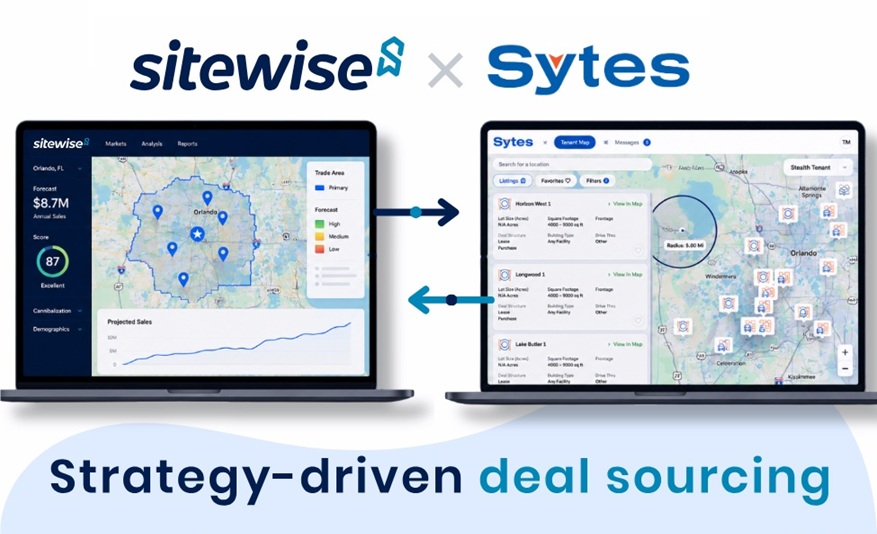
How Sitewise and Sytes Work Together: From Market Strategy to Real Estate Opportunity
Sitewise provides the foundation for deciding where and how a brand should grow. Sytes connects that strategy to the RE market and brings opportunities back.
Rafael Weiss
Sytes Editorial
For an expanding brand, finding the right real estate is rarely as simple as finding an available property. Before a developer, landlord, or broker can present a site, the tenant needs to know where it wants to grow, what type of market it is targeting, and what characteristics a successful location needs to have.
That is where the connection between Sitewise and Sytes becomes useful. Sitewise helps an expanding brand develop and evaluate its real estate strategy, while Sytes connects that strategy with developers, landlords, and brokers who have opportunities in the markets where the brand wants to grow.
Consider a hypothetical restaurant brand preparing to open 20 new locations over the next two years.
The brand knows it wants to expand into several new markets, but it does not want its real estate team spending months reviewing every property that happens to come across a broker's desk. Instead, the team can use Sitewise to identify target markets, analyze potential trade areas, and establish the characteristics a site needs to meet the brand's financial and operational requirements.
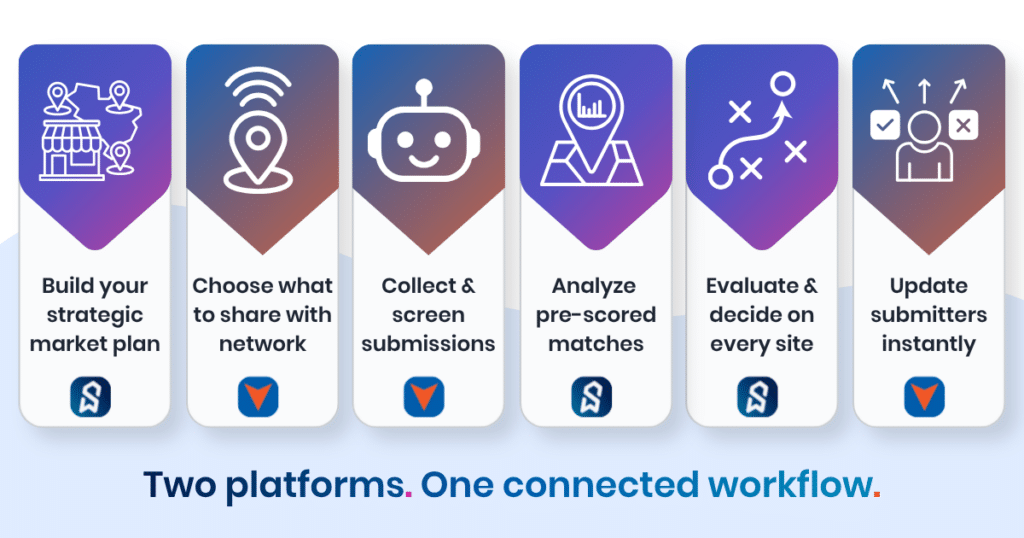
Strategy → Market Plan → Site Requirements
Sitewise is where the strategic foundation is established. The team can determine which markets have the right combination of demographics, whitespace, sales potential, competition, and other factors, then define what a strong site looks like within those markets.
Once the team is ready to source real estate, that strategy can be connected to Sytes.
Rather than simply telling the market that the brand is “looking in Dallas” or “expanding in Texas,” the tenant can make specific target areas and site requirements available through Sytes. The brand also controls how much information it wants to share, allowing it to broaden its reach without necessarily broadcasting its entire expansion strategy.
Market Plan → Shared Requirements → Real Estate Network
Now the process moves from strategy to availability.
A developer with a property in one of the target areas, for example, may see that the site matches the tenant's requirements and submit the opportunity through Sytes. Instead of the tenant discovering the property through a cold email, an outdated broker list, or a relationship that happens to exist, the opportunity has found its way into the tenant's pipeline because it matches a current market need.
This is where Sytes serves a different role from Sitewise. Sitewise helps determine what the brand should be looking for; Sytes helps put those requirements in front of the people who may have the right real estate.
Real Estate Opportunity → Sytes → Sitewise
Once a relevant property is submitted, the process moves back into Sitewise. The tenant can evaluate the opportunity using the same analytical tools and criteria it uses for sites sourced through other channels, including sales forecasting, site evaluation, and cannibalization analysis.
The important distinction is that the tenant is no longer starting that analysis with an arbitrary property. The opportunity has already been connected to a market and set of requirements established through the brand's broader strategy.
If the site looks promising, the tenant can move it forward. If it does not, the tenant can reject it. Either way, the decision can flow back through Sytes to the developer, landlord, or broker who submitted the property.
Site Evaluation → Decision → Submitter
The entire process creates a loop rather than a series of disconnected steps:
Strategy → Market Plan → Requirements → Sytes → Matching Opportunities → Sitewise Evaluation → Decision → Sytes → Submitter
That distinction matters because site selection is often described as a pipeline, when in reality it is a feedback loop. Markets and expansion priorities change, and a site that looks attractive at one point may no longer fit several months later. Requirements can evolve as a brand learns more about its customers and its existing portfolio.
With Sitewise and Sytes connected, those changes can inform the sourcing process rather than remaining trapped inside a strategy document that the market never sees.
For the hypothetical restaurant brand, the result is not simply more properties to consider. It is a more targeted flow of properties, informed by the brand's current strategy and evaluated through the same analytical process used to determine where it should grow in the first place.
That is the fundamental value of connecting the two platforms. Sitewise provides the strategic foundation for deciding where and how a brand should grow. Sytes connects that strategy to the real estate market and brings relevant opportunities back into the decision-making process.
The goal is not to create another place for a real estate team to manage. It is to connect the places where strategy, availability, analysis, and decisions already happen so that information can move with the deal.