How Do Retailers Find the Right Location When Expanding?
A location can check every box and still be a bad expansion decision if the rent, construction costs, taxes, or other expenses leave too little room to perform.
Rafael Weiss
Sytes Editorial

When a retailer decides to open another location, the natural instinct is to start looking at available real estate. That can be useful, but it can also put the process backwards. The right location is not necessarily the most attractive property a retailer can find; it is the property that best supports the business's customers, operations, economics, and plans for growth.
The process should start with understanding where the business wants to go. A retailer expanding into a new market needs to consider more than population growth or household income. Where do its existing customers live? Are there areas where the brand already has demand but no convenient location? Are competitors performing well in a particular trade area? Is the retailer trying to increase market coverage, reach a new customer base, or fill a specific gap in its existing portfolio?
Those questions help establish the markets worth pursuing before individual properties enter the conversation.
Once the target markets are identified, the retailer can define what a successful location actually looks like. This might include traffic patterns, visibility, access, parking, demographics, co-tenancy, proximity to complementary businesses, building size, site configuration, or acceptable occupancy costs. The requirements will vary considerably between a restaurant, medical operator, service business, and traditional retailer, which is why there is no universal definition of a good retail site.
The economics have to work, too. A location can check every box from a demographic and operational perspective and still be a bad expansion decision if the rent, construction costs, taxes, or other occupancy expenses leave too little room for the store to perform. Retailers need to evaluate a potential site based on what they expect the location to produce, not simply whether the asking rent looks competitive with nearby properties.
That is where the process can become more difficult. Once a retailer has established its strategy and requirements, it needs to find actual properties that meet them. The traditional process can involve brokers sending listings, developers reaching out directly, internal teams searching multiple databases, and real estate professionals relying on their existing relationships. Those channels can produce good opportunities, but they can also make it difficult for a retailer to communicate its requirements consistently across an entire market.
A retailer might know exactly what it wants but still never see the right property simply because the owner or developer did not know the retailer was looking.
This is one of the reasons it is useful to think about expansion as a two-sided process. Retailers need to know what they are looking for, but the people with the real estate need a clear signal that there is demand for a particular type of location.
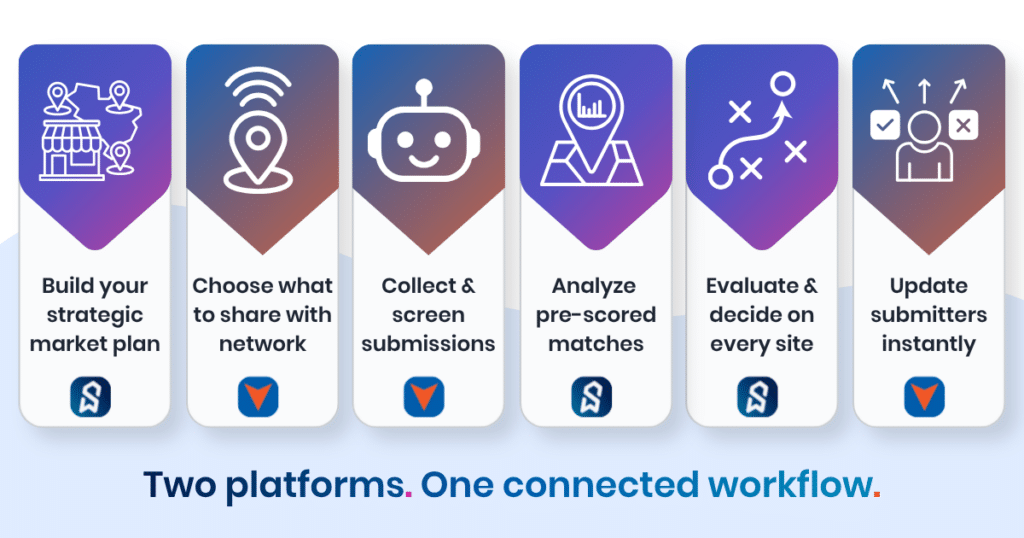
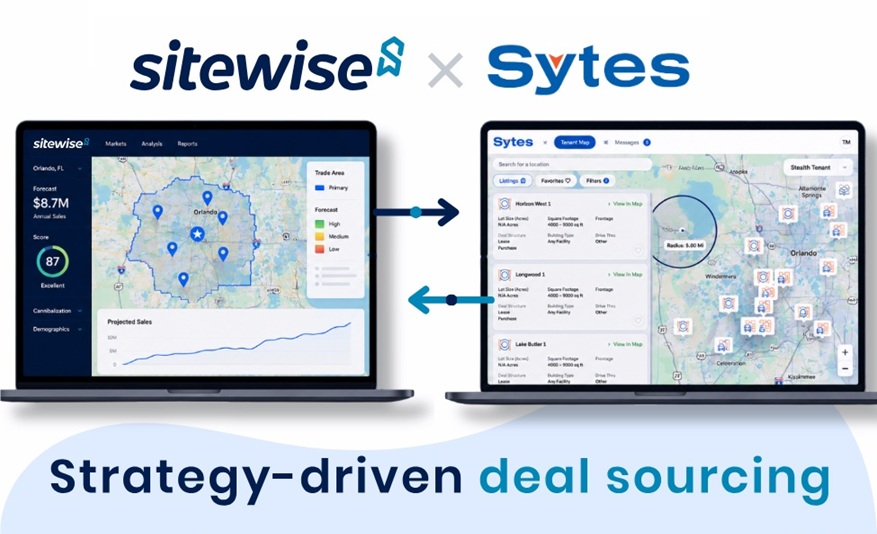
Sytes is designed to help connect those two sides. Retailers can post their location requirements so developers, landlords, and brokers can identify opportunities that may fit. Instead of relying exclusively on the properties already being marketed, the retailer can make its demand visible to a broader network of real estate professionals who may have sites that have not yet reached the retailer's radar.
The evaluation process still matters once those opportunities arrive. A property being submitted does not make it the right location. It needs to be measured against the retailer's market strategy, site requirements, financial model, and existing portfolio. The goal is to bring more relevant opportunities into the pipeline without lowering the standard for what ultimately moves forward.
The best expansion strategies therefore work backward from the business rather than forward from the available real estate. Start with the markets and customers, define the characteristics the business needs, establish the economics that make sense, and then find properties that fit those parameters.
Retail expansion is ultimately a matching problem. The retailer has a strategy and a set of requirements; the market has properties, owners, and developers with opportunities to offer. The closer those two sides can get to each other, the easier it becomes to find locations that are not simply available, but genuinely capable of helping the business grow.