If AI Starts Making Consumer Decisions, What Happens to Location?
Visibility creates awareness, awareness creates traffic, and traffic creates value. What happens if consumers stop making many decisions themselves?
Rafael Weiss
Sytes Editorial
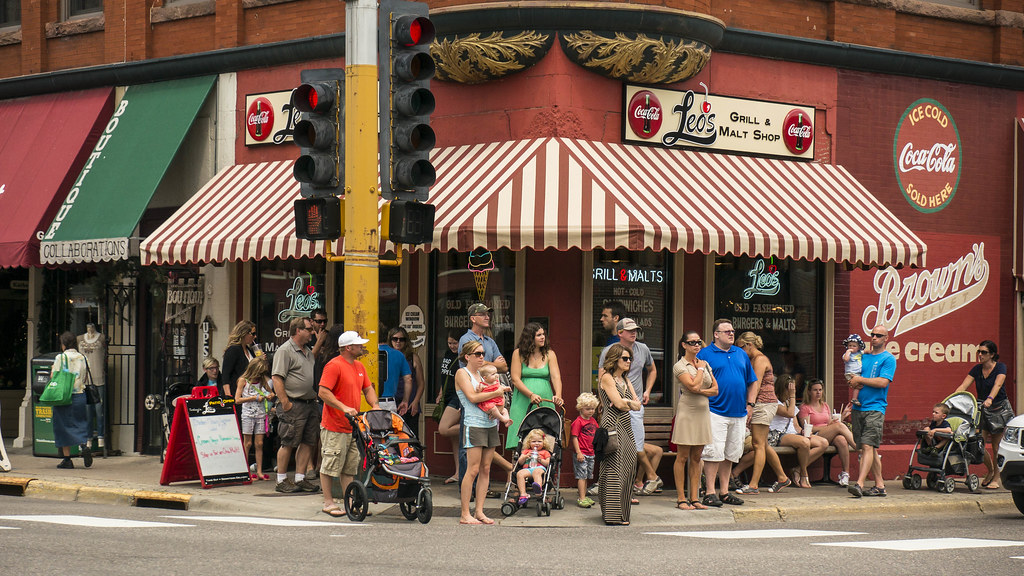
Commercial real estate has always been built around the simple assumption that people make choices. A person sees a restaurant on a busy corner while taking a walk and becomes a customer. A shopper passes a storefront, sees a sign for a sale, and walks through the door. Visibility creates awareness, awareness creates traffic, and traffic creates value.
Now, what happens if consumers stop making many of those decisions themselves?
Not entirely, of course. People will always have preferences, habits, and opinions. But as AI assistants become more capable, it's not hard to imagine a future where consumers increasingly outsource routine decisions.
"Find me a dentist."
"Order lunch."
"Schedule a haircut."
"Book a veterinarian."
Instead of searching, comparing, and evaluating options themselves, consumers may simply delegate the process to an algorithm that returns a recommendation or makes the choice for them.
If that happens, a fascinating question emerges: What value does location have when the customer never sees it?
For decades, some of the most valuable commercial real estate in the world has derived its value from visibility. Businesses paid premiums to be on hard corners, major thoroughfares, and highly trafficked intersections because exposure generated demand. Being seen was often just as important as being convenient.
An AI, however, doesn't drive by your building. It doesn't admire your storefront. It doesn't notice your new signage package or your recent façade renovation. It doesn't decide to stop because the patio looks inviting.
Instead, it evaluates data.
How quickly can an order be fulfilled? What are the reviews? How convenient is pickup? How reliable is the service? What is the price? What is the likelihood of customer satisfaction?
In a perfectly unfair world, this would mean prime locations suddenly become worthless. Thankfully, humans are naturally capricious creatures; many would likely remain extremely valuable because they're already positioned near population centers and demand drivers. But it does suggest that some of the traditional reasons a property commands a premium could begin to change.
Imagine two restaurants.
One occupies a beautiful corner location in a high-profile retail corridor. The other sits behind a larger shopping center where few people notice it. Under traditional assumptions, the corner location enjoys a major advantage.
But what if an AI assistant consistently recommends the second restaurant because orders are fulfilled faster, parking is easier, reviews are stronger, and pickup times are shorter?
The customer may never know—or care—that the business is tucked away from view.
The same principle could extend beyond restaurants. Medical offices, fitness concepts, service businesses, and countless other categories could find themselves competing less on visibility and more on operational performance. In that environment, logistical efficiency might become as important as frontage.
If that is the case, and AI increasingly routes consumer demand, should properties be evaluated differently? Do access, fulfillment speed, parking convenience, and operational efficiency deserve more attention than they currently receive? Could some overlooked locations become more valuable because they perform well in an algorithm-driven environment?
It's worth noting that commercial real estate has encountered similar shifts before. E-commerce didn't eliminate physical retail, but it changed what made retail successful. Remote work didn't eliminate offices, but it forced owners to rethink what tenants valued. Technology rarely destroys entire asset classes overnight. More often, it changes the factors that create competitive advantage.
The same may be true here.
My suspicion is that consumers won't completely surrender decision-making to AI. People still enjoy discovery. They still respond to branding, atmosphere, and experience. Main Street isn't disappearing because an algorithm exists.
At the same time, it would be unwise to ignore how quickly technology can reshape behavior once convenience becomes compelling enough.
At Sytes, I spend a lot of time looking at tenant demand and site selection patterns. One thing I've learned is that markets often reward the people asking the right questions before the answers become obvious.
Whether AI ultimately changes how consumers choose businesses remains to be seen.
But if algorithms become a meaningful gatekeeper between consumers and the physical world, commercial real estate may need to rethink one of its oldest assumptions. Not that location matters less, but that the definition of a great location may look very different than it does today.